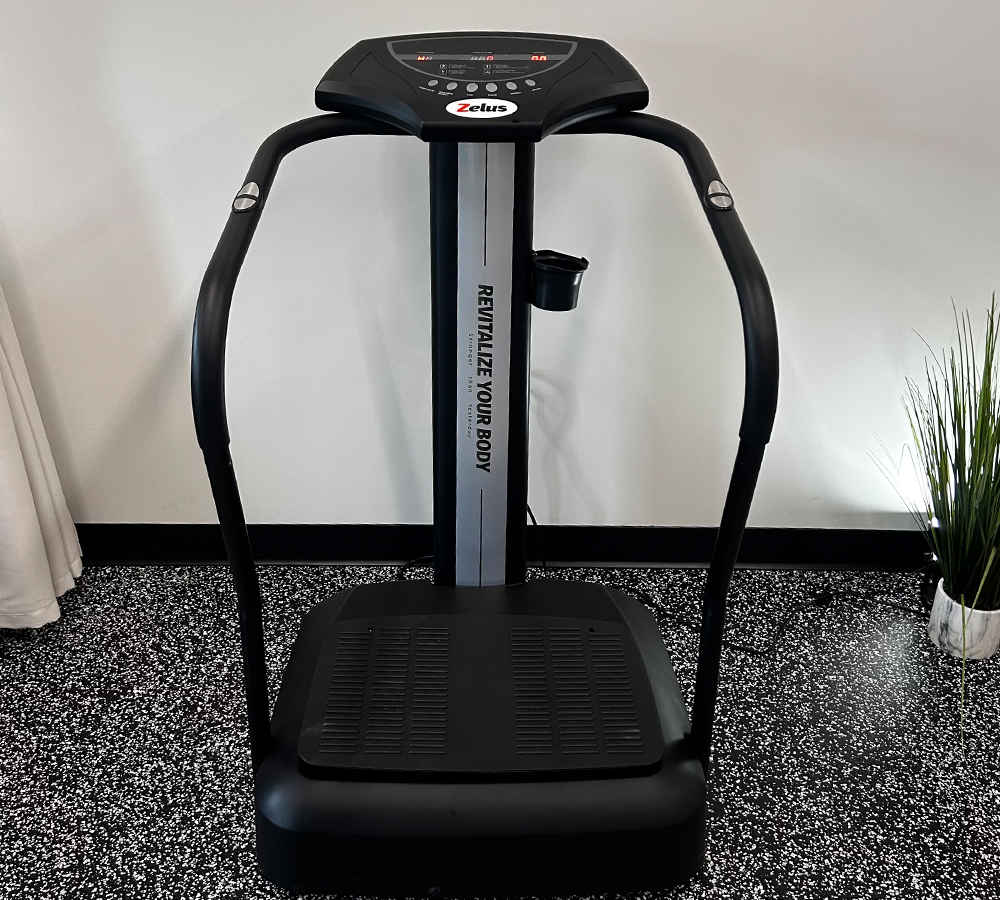
A vibration plate delivers whole-body vibration (WBV), causing rapid muscle contractions and neuromuscular activation. This is helpful for people who can’t tolerate heavy loading but want to strengthen and stabilize muscles. It aids in balance, stimulates bone density, and can reduce chronic pain.
Benefits of a vibration plate:
- Pain Reduction. Stimulates pain-inhibiting nerve pathways and reduces joint stiffness for decreased low-back, knee, and hip pain.
- Muscle Activation. Causes involuntary muscle contractions (up to 30–50/sec) and improves muscle recruitment in glutes, quads, core, and stabilizer muscles.
- Fall Prevention. Improves body awareness and enhances neuromuscular control, which can reduce falls in the elderly.
- Improved Circulation & Lymphatic Flow. Increases blood flow to muscles and skin, and helps move lymphatic fluid to reduce swelling.
- Bone Density Support. Mechanical vibration stimulates bone cells (osteoblasts), helping to maintain or slightly improve bone density and prevent osteoporosis.
- Improved Range of Motion. Helps with chronic tightness in hips, calves, hamstrings and back. Can be useful for patients in post-injury rehab, or with arthritis or fibromyalgia.
Who Should Avoid or Use Caution With a Vibration Plate?
Patients with the following conditions should ask a physician before using a vibration plate: Those with a pacemaker or implanted devices, anyone who has had recent surgery or fractures, those with herniated discs (unless guided), pregnant women, those with epilepsy, and anyone with a severe cardiovascular disease, kidney stones or gallstones.
Pricing: 10/15 min — $10/$15